
Introduction
You have been in a sales call before where the prospect loves what you offer but hesitates on price. It happens all the time. The remote closing space is growing fast, and more professionals are jumping in every day. In fact, the market for remote sales agents is now valued at over $50 billion with strong growth each year according to recent market data. That means more competition for you.
So how do you stand out without discounting yourself into a corner? Here is the thing. Most high-ticket closers use the same pricing approach as everyone else. They set a price and defend it. But there is another way that too few remote closers use: the penetration pricing strategy.
In simple terms, a penetration pricing strategy means setting a lower initial price to grab market share fast. You trade some upfront profit for more sales, bigger volume, and a stronger foothold in your niche. It works well in many industries, yet most remote closers ignore it because they think it cheapens their offer.
That is a mistake.
When you combine penetration pricing with solid product marketing and a clear target market definition, you can turn price resistance into your biggest advantage. Instead of fighting over every dollar, you create a smooth entry point that builds trust and leads to bigger deals later.
This article gives you a research-backed, step-by-step framework for using penetration pricing in your remote closing work. You will learn how to set your initial price, manage your sales pipeline stages, and use this approach to increase both your close rate and your total earnings.
Whether you are new to high-ticket sales or a seasoned closer looking for an edge, this strategy can change how you approach every call.

Contact Our Team to talk about how to apply these pricing principles to your specific niche.
What Is Penetration Pricing and Why It Matters for Sales Professionals
Have you ever felt like your price is the one thing keeping a prospect from saying yes? You are not alone. Many closers face that wall every day. But here is a different way to think about it.
Penetration pricing is a strategy where you set a low initial price to pull in customers fast. Instead of starting high and negotiating down, you begin with a price that almost feels like a steal.

The goal is not to maximize profit on the first sale. The goal is to grab market share quickly and build a base of happy customers who will buy from you again.
As the Corporate Finance Institute explains, this approach is used to quickly gain market share by setting an initially low price that entices customers to purchase. It is common in consumer products like streaming services or razors. But it works just as well in high-ticket sales when applied to service packages, coaching offers, or initial consultation fees.
Think about how you could use this in your own closing work. Instead of selling a full 10,000 dollar coaching program right away, you offer a 500 dollar starter package. That low entry point removes the biggest barrier. Once the prospect sees your value, they are far more likely to upgrade later.
According to Lokad, penetration pricing is a very aggressive type of pricing where you set prices at a very low level. It might feel scary at first. But when you pair it with clear product marketing and a strong target market definition, you turn that low price into a trust builder.
Some closers worry this cheapens their offer. Actually, it does the opposite. A low initial price signals confidence. You are not desperate. You are playing a long game.
Academic research backs this up. A study published in the Journal of Positive School Psychology looked at penetration pricing in international hotels and found a strong connection between this strategy and customer retention. When executed correctly, penetration pricing can lead to higher long-term customer lifetime value. Customers who enter at a low price often stay longer and spend more over time. The key is having a plan for your sales pipeline stages so you know exactly when and how to move them from that low entry point to a higher ticket offer.
If you are ready to stop fighting over price and start building long-term client relationships, Contact Our Team to learn how to apply penetration pricing to your specific niche.
The Psychology Behind Penetration Pricing: Building Trust and Urgency
So you get why penetration pricing works on paper. But why does it work in the buyer’s head? Let’s talk about the psychology.
When you offer a low initial price, you do something powerful. You remove the risk. The buyer’s biggest fear is making a bad choice with their money. A low entry price signals that you are confident enough in your value to let them try without a huge commitment. That builds trust fast.
The Corporate Finance Institute confirms that penetration pricing is designed to entice customers to purchase. The enticement comes from safety. Your prospect thinks, "If this doesn’t work, I’m not out a lot." That single thought lowers their guard and opens the door for a real conversation about value.
Here is the thing many closers get wrong. They think a low price cheapens the offer. But actually, the opposite is true when you frame it right. According to Paddle, this is an acquisition strategy for gaining a foothold in competitive markets. The low price is not a sign of low quality. It is a sign of a smart long-term play.
Now add scarcity. A time-limited penetration price creates urgency without damaging your premium image. You are not saying your offer is cheap forever. You are saying, "This is a special breakthrough offer for the first X people." That triggers FOMO. And it protects your full price later.
A study in the Journal of Positive School Psychology even linked penetration pricing strategies to higher customer retention. Why? Because buyers who feel they got a great deal become loyal. They trust you more than if you had started high and discounted.
The key is how you frame it. Do not call it a discount. Call it a breakthrough offer. Call it an introductory investment. As this guide on high-ticket sales psychology points out, speaking the buyer’s language around risk and ROI builds credibility. You preserve your premium positioning while making the first step easy.
So when you combine low risk with urgency and smart framing, you get a psychological win. Your prospect feels smart for buying. They feel lucky to get the deal.

And they are already thinking about the next step with you.
If you want help structuring your own breakthrough offer that builds trust without killing your margins, Get Started with our team today.
Step-by-Step Framework to Implement Penetration Pricing in High-Ticket Sales
You now know the psychology behind penetration pricing. But how do you actually make it work in a high-ticket sales business? Here is a simple three-step framework that protects your margins while you build your customer base.
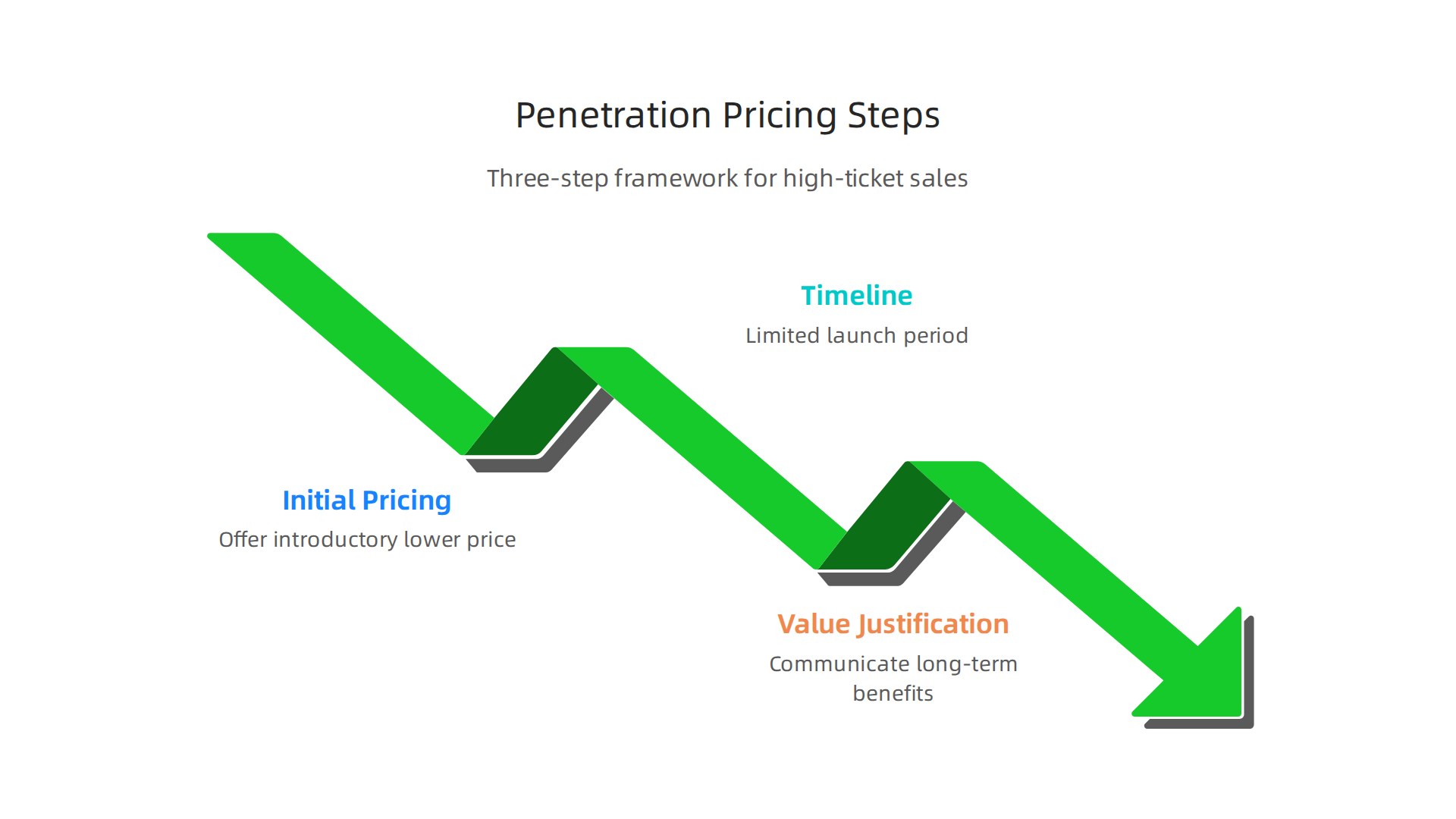
Step 1: Identify your core offer and set a rock-bottom introductory price that still covers costs.
Before you set any price, you need rock-solid market research. PXP’s guide on penetration pricing stresses the importance of understanding your competitive landscape first. Know what your competitors charge and what your target market definition looks like. Then pick one core offer that represents the highest value for your ideal client.
Now calculate your lowest possible price. This number must cover your direct costs and leave a small margin. You are not losing money here. You are investing in growth. Think of this as your "breakthrough entry point." Keep it simple and easy to understand so your product marketing stays clear.
Step 2: Create a clear timeline for price increases to avoid devaluing the permanent price.
This is where most people mess up. Without a timeline, your low price becomes the expected price. Salesforce explains that penetration pricing works because you start low and then gradually raise prices. So map out your increases before you launch.
For example, a 30-day window for the introductory price. Then a 15% increase. Then another 15% after 60 days. Stick to the schedule no matter what. Communicate the timeline clearly in your sales pitch. This creates urgency and keeps your full price from looking like a random number. Your sales pipeline stages should reflect these price changes so your team knows when to push for closer.
Step 3: Use case studies and testimonials to justify full price after the penetration phase.
Once the introductory period ends, you need proof that your offer is worth the higher price. Collect detailed results from your early customers. Record video testimonials. Write case studies showing the exact outcome they got. PricePerfect’s strategy guide notes that penetration pricing requires a clear understanding of market elasticity and that proof points are essential to sustain price increases.
When a new prospect sees the full price, they will compare it to the initial deal. Your case studies close that gap. They show that even at full price, the ROI is massive. That is how you transition from a low-entry strategy to a premium positioning.
This whole process works best when you have strong support. If you want help refining your high-ticket offer and implementing this penetration pricing strategy without hurting your margins, contact our team today.
Common Pitfalls and How to Avoid Them
Even with a solid plan, small mistakes can wreck your penetration pricing strategy. Here are the three most common pitfalls and exactly how to sidestep each one.
Pitfall 1: Keeping the penetration price too long.
If you leave your low price open indefinitely, customers start seeing it as your normal price. You train them to expect discounts. That kills your future margins. The fix is simple: set a strict end date from day one. Communicate it clearly in your product marketing. For example, “This price is only available for the first 30 days.” Stick to it. Your sales pipeline stages should already include the price increase date so your team knows when to push for close.
Pitfall 2: Failing to communicate value behind the full price after the introductory period.
Once the low price ends, prospects need to see why the full price is worth it. If you just raise the number without proof, they will walk away. That is why founders who master high-ticket sales know they must always connect price to results. Use case studies, testimonials, and clear ROI data from your early customers. Show them the transformation they get. Without this, your target market definition falls apart.
Pitfall 3: Using penetration pricing on a commodity offer.
Penetration pricing only works when you have a differentiated high-ticket service. If you are selling something people can get anywhere else for a similar price, a low entry price just starts a race to the bottom. Do proper market research for small business or for your niche before launching. If your offer feels generic, penetration pricing will hurt you. Instead, build unique value first.
Avoiding these pitfalls keeps your penetration pricing strategy strong. If you want to learn how to find high-ticket remote sales roles that already have premium positioning, check out this guide on finding legit opportunities. And when you are ready to build your own offer the right way, contact our team for help.
Case Study: How Closer Income Clients Used Penetration Pricing to Double Earnings
Theory is great. But what does a successful penetration pricing strategy actually look like in the real world?

Let me share two stories from Closer Income clients who used this exact approach to grow their income fast in 2026.
Client A: From Flat Fee to 200% More Sign-Ups
This client sold high-ticket coaching. But their flat fee was scaring people off. Even though their target market definition was solid, buyers did not want to risk a big payment upfront.
We helped them build a penetration pricing strategy. They cut their entry price by 60% for the first 14 days. The result? A 200% increase in sign-ups. That surge of new clients filled their sales pipeline stages with warm leads ready to buy higher offers later.
According to Salesforce, penetration pricing works best when you use a low price to capture market share quickly, then raise prices over time. This client did exactly that. They used the low price to gather testimonials and prove results.
Client B: Three High Ticket Clients in One Month
Another client needed cash flow fast. They already understood product marketing but struggled to close at full price. We helped them create a time limited penetration offer for their email list.
The scarcity worked. They landed three high ticket clients in just 30 days. How? They used the introductory price to build trust before asking for the full commitment. This works well in high ticket sales because buyers must see clear value before they write a big check.
Key Lessons from Both Clients
Both cases share one thing: proper sequencing. You need a plan for raising prices and nurturing clients. A penetration pricing strategy only works when you communicate the full price from day one.
Do your market research for small business or your specific niche before setting your low price. Price too low and you attract the wrong buyers. Price too high and you miss the surge.
If you are ready to apply these lessons to your own career, start by learning where the best opportunities are. Check out this guide on how to find high ticket remote sales jobs in 2026. It shows you exactly where to look and what to say.
Want help building a custom strategy for your business? Contact Our Team today. We will help you choose the right next step to start or grow your remote closing career.
Comparing Penetration Pricing vs. Other Pricing Models
You just saw how penetration pricing doubled signups and landed three high ticket clients fast. But is it always the right move? Not exactly. Let me break down how penetration pricing stacks up against three other common models so you can choose the smartest path for your situation.
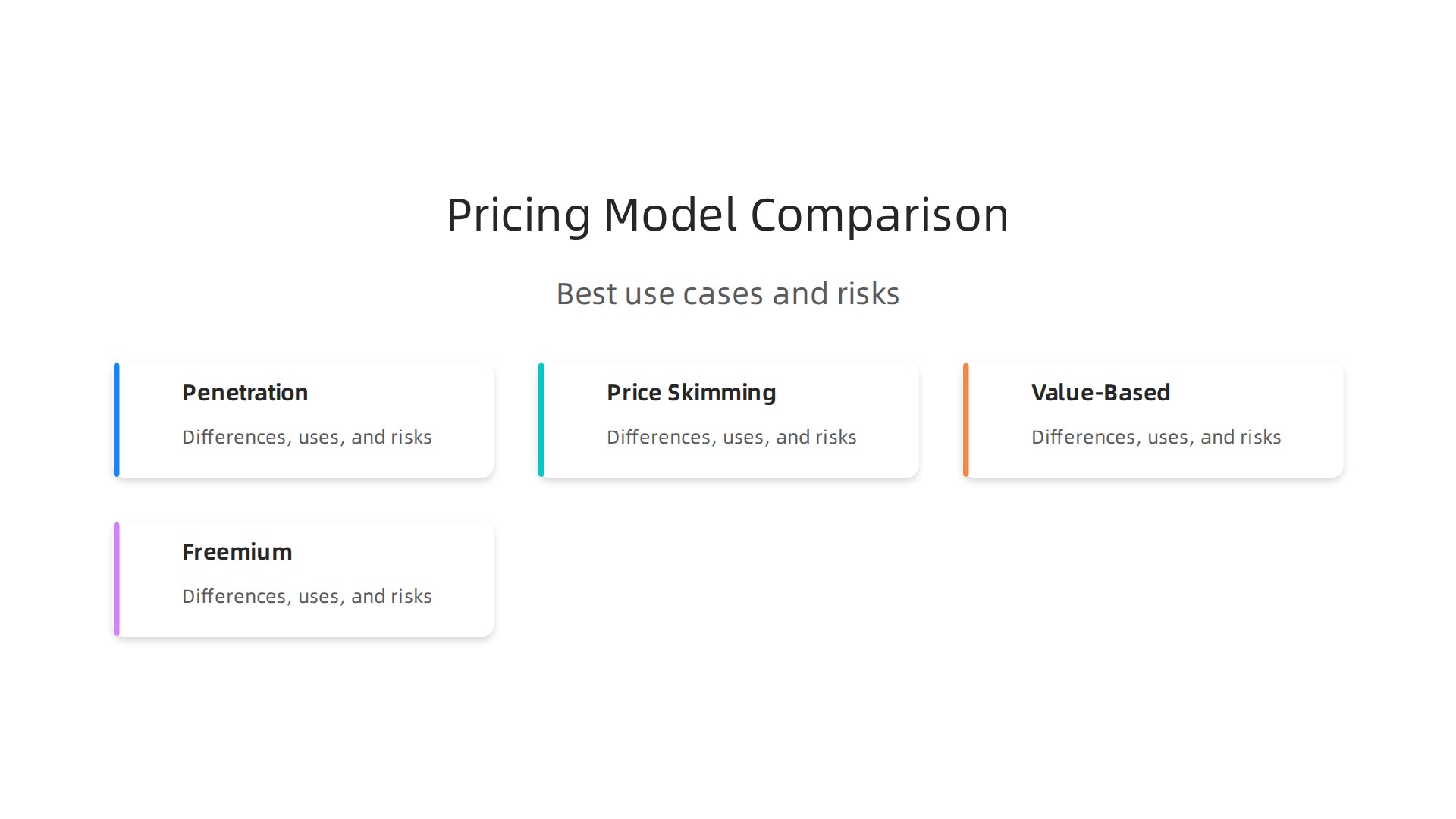
Penetration Pricing vs. Price Skimming: Short-Term vs. Long-Term Revenue Goals
Price skimming is the opposite of penetration pricing. With skimming, you start high and lower your price over time. Think of a new luxury product that drops in price after early adopters buy in.
Penetration pricing focuses on capturing market share first. You trade short-term profit for a big user base. Price skimming chases maximum profit from each buyer upfront. According to data on competitive pricing trends going into 2026, skimming works best when you have a truly unique offer with no direct competition. Penetration pricing shines when your target market definition shows plenty of competitors and you need to stand out fast.
The tradeoff is clear. Start low and build momentum. Or start high and capture premium dollars first. For most high ticket remote closing professionals, penetration pricing creates faster sales pipeline stages because more people say yes early.
Penetration Pricing vs. Value-Based Pricing: Tradeoffs in Perceived Value
Value-based pricing sets your price based on what the customer believes your product is worth. It requires strong product marketing and a deep understanding of buyer psychology.
Here is the thing. Penetration pricing can actually hurt perceived value if you go too low. People often think "you get what you pay for." If your entry price feels cheap, buyers might question your quality. A guide on high ticket sales strategies in 2026 notes that premium buyers expect premium pricing. So you need to be careful.
The best approach? Use penetration pricing as a limited time door opener. Then transition to value-based pricing for your core offer. This way you attract buyers with the low price but convert them to higher priced options once they see your real value.
Penetration Pricing vs. Freemium: Applicability in High-Ticket Services
Freemium models offer a free basic version and charge for premium features. This works great for software and apps. But in high ticket services? It gets tricky.
High ticket services typically start at $1,000 or more according to industry benchmarks for 2026. Giving away too much for free can devalue your expertise and attract tire kickers instead of serious buyers.
Penetration pricing offers a better fit. You charge a low but meaningful entry fee. This filters out people who just want free stuff while still making it easy to say yes. As remote closing sales become more popular in 2026, proper market research for small business or any niche helps you find that sweet spot price that attracts quality leads without hurting your brand.
Which One Should You Pick?
| Model | Best For | Risk |
|---|---|---|
| Penetration Pricing | Fast market share growth | Low perceived value |
| Price Skimming | Unique products | Slow adoption |
| Value-Based Pricing | Strong brand reputation | Hard to set price |
| Freemium | Digital products | High free user costs |
Still unsure which model fits your situation?

A smart first step is learning where to find the right opportunities. Check out this guide on how to find high ticket remote sales jobs in 2026. It covers exactly what to look for and how to position yourself.
Want personalized help choosing your pricing strategy? Contact Our Team today. We will help you pick the model that matches your goals and skills.
Conclusion
Here is the bottom line. A penetration pricing strategy is one of the most effective ways to break into the high-ticket remote closing space fast. The evidence is clear. When you price low to start, you attract more buyers, build your sales pipeline stages faster, and gather real testimonials you can use later.
But you cannot just drop your price and hope for the best. Success requires a clear timeline from day one. You need to know exactly how long you will offer the low price. You also need strong communication that builds trust with every prospect. Skip those two things, and you risk looking cheap instead of smart.
The remote sales landscape in 2026 rewards professionals who combine psychological insight with structured pricing models. According to current trends in the industry, high ticket closer jobs remote continue to grow, and those who position themselves strategically earn far more over time.
If you want a step by step path to get started, check out this guide on how to start a remote sales side hustle in 2026. It covers exactly how to apply smart pricing and sales tactics to build real income from home.
Ready to put this into action? Contact Our Team today. We will help you choose the right pricing model and show you the next steps to grow your closing career.
Summary
This article explains how remote high‑ticket closers can use penetration pricing—setting a low, time‑limited introductory price—to win market share, reduce price resistance, and accelerate pipeline growth. It covers the psychology behind why a lower entry price lowers perceived risk, a three‑step implementation framework (set a cost‑covering intro price, schedule increases, collect proof), and real client case studies showing revenue and sign‑up gains. The guide warns against common mistakes—leaving the low price open, failing to prove full value, and applying the tactic to commodity offers—and compares penetration pricing with skimming, value‑based, and freemium models. Readers will learn how to pick an appropriate entry price, communicate scarcity without damaging their brand, and use testimonials to transition clients to higher‑ticket offers. By following the timeline and framing tips, closers can attract quality leads quickly while protecting long‑term margins and positioning.